

 Kev Caballero
 Why 5-Star Reviews Alone Won’t Save Your Columbus Map Rank
Why 5-Star Reviews Alone Won’t Save Your Columbus Map Rank
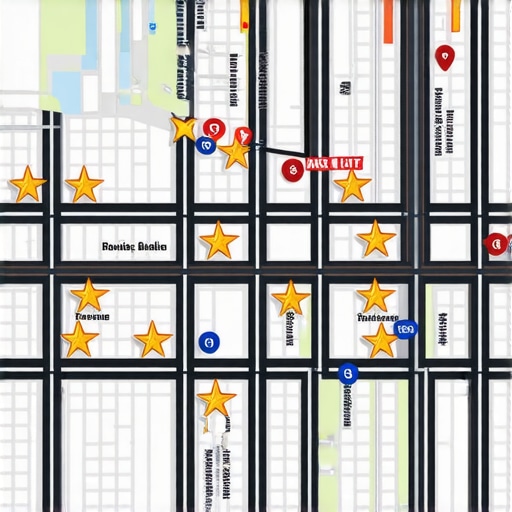
Imagine this: You own a roofing company based in the Short North. You’ve spent the last three years meticulously providing top-tier service to homeowners across Columbus. You have 125 reviews on your Google Business Profile (GBP), and your average rating is a stellar 4.9. You check the Google Map Pack for “roofing contractor Columbus,” expecting to see your business sitting proudly in the top three. Instead, you’re buried on Page 2, trailing behind a competitor in Grandview who has only 40 reviews and a 4.2 rating.
Frustrating? Absolutely. Surprising? Not to those of us who live and breathe technical SEO.
As we move into the 2025-2026 landscape, the “Review Trap” has become the single biggest point of failure for local businesses. Many Columbus business owners are operating under an outdated 2018 mindset: “If I just get more 5-star reviews, Google will have to rank me.” I’m here to tell you that’s no longer the case. While reviews are a vital “trust signal” for the human beings reading them, they are no longer the “ranking silver bullet” they once were. Your 5-star rating might even be lying to you about the health of your search visibility.
The reality is that Google’s 2026 algorithm views reviews as just one small piece of a much larger, more complex puzzle. Recent data from the local SEO Reddit community suggests that short, no-text 5-star reviews barely move the needle anymore. If your customers are just clicking the fifth star and hitting “post” without describing the service, the location, or the specific value provided, Google’s AI treats those reviews as low-weight signals. To rank in a competitive market like Columbus, you need more than just happy customers; you need a technical foundation that satisfies the three core pillars of the local algorithm.
Before you send out another automated text blast asking for stars, you need to understand Why begging for stars is the worst way to get Columbus customers to review you. Instead, let’s look at what is actually moving the needle in the modern Map Pack.
The Three Pillars of the Local Algorithm: Relevance, Proximity, and Prominence
To understand why your reviews aren’t saving you, we have to look at how Google actually builds the Map Pack. Google explicitly defines three primary ranking factors: Relevance, Proximity, and Prominence. If you are failing in two of these, no amount of 5-star reviews will bridge the gap.
1. Relevance: Are You What They’re Looking For?
Relevance is how well your local Business Profile matches what someone is searching for. This goes far beyond your business name. It involves your primary and secondary categories, your service list, and even the content on your linked website. If a user searches for “emergency 24-hour plumber Columbus” and your profile only lists “Plumber” as a category without mentioning emergency services in your description or service menu, Google may deem you irrelevant – even if you have 500 reviews. For a successful google business profile seo strategy, your profile must be a 1:1 match for the intent of the local searcher.
2. Proximity: The “Unbeatable” Factor
According to research by Yadav Bikash, “Proximity (Distance) is a major factor… essentially, how close your business is to the person searching.” This is the factor most Columbus business owners find most infuriating. If a customer is searching from a coffee shop in German Village, Google is biased toward showing them businesses in German Village or the Brewery District. If your office is in Dublin, you are fighting an uphill battle against the “proximity filter.” You cannot “review” your way out of a distance problem. This is why you see smaller, less-rated businesses outranking you – they are simply closer to the user at that exact moment.
3. Prominence: Your Digital Footprint
Prominence refers to how well-known a business is. This is calculated based on information Google has about a business from across the web, like links, articles, and directories. This is where technical SEO comes into play. Offline authority – like being a well-known institution in Columbus – matters, but online authority is measured through backlinks and citations. If your competitor is getting mentions in the Columbus Dispatch or has links from local neighborhood associations, their “Prominence” score will dwarf your review count. To stay ahead, you must be Mastering Local Business SEO in Columbus for 2025 by building authority outside of your GBP.
Why Your Competitors with Fewer Reviews are Outranking You
If you’ve ever looked at the Map Pack and felt like the results were “wrong,” you were likely looking at the effects of technical optimization. There are “invisible” factors that determine rank which have nothing to do with customer satisfaction and everything to do with data integrity.
One of the most common issues I see in the Columbus market is the “Ghost Pin” or address mismatch. If your business moved from a suite in Easton to an office in Polaris, but 20% of your old citations (Yelp, Yellow Pages, local directories) still point to Easton, Google loses trust in your location data. When Google’s AI detects conflicting information, it suppresses your profile to avoid sending a user to the wrong place. We’ve seen cases where Why Your Columbus Map Pin Points Customers to the Wrong Street because of these legacy data errors, effectively killing the business’s rank despite a perfect 5.0 rating.
Furthermore, your competitors may be utilizing a superior Map Embed strategy. By embedding a properly optimized Google Map on their website – specifically on location-siloed pages – they are reinforcing the relationship between their physical address and their digital presence. You can learn more about The map embed method that actually helps your Ohio business rank to see how this technical tie-in works.
Google’s official blog has also highlighted that the March 2025 Core Update significantly increased the use of AI to catch “suspicious edits and fake five-star reviews.” If you’ve been using a “review service” or if your reviews come in “bursts” that don’t match your actual foot traffic patterns, Google may not only ignore those reviews but actively penalize your prominence score. The algorithm is now smart enough to recognize the difference between a genuine local customer and a bot-generated review from halfway across the world.
The 2026 Algorithm Shift: Mobility and Engagement
As we look toward 2026, the priority of the google maps ranking factors is shifting toward Interaction Rates and Review Velocity. It’s no longer about the total number of reviews you have; it’s about how many you’ve received lately and what people do after they see them.
- Review Velocity: If you have 200 reviews, but the last one was from six months ago, Google views your business as potentially stagnant or even closed. A competitor who gets three reviews a week, every week, has higher “velocity” and appears more relevant to the current market.
- Interaction Rates (CTR): Google tracks how many people click the “Call” button, request directions, or click through to your website. If 100 people see your profile and 10 people call, you have a 10% interaction rate. If your competitor has a 20% rate, Google will eventually swap your positions. High-quality photos and updated “Google Updates” (posts) are the best google maps ranking tips to improve these interaction rates.
To prepare for these changes, business owners need to implement Survival steps for the 2026 Google Business Profile algorithm shift. The focus must move from passive “star collecting” to active “profile management.”
Technical Fixes: Beyond the Review Tab
If you want to reclaim your rank in the Columbus Map Pack, you need to stop looking at your reviews and start looking at your technical health. Here is a checklist of the “invisible” factors you need to audit immediately:
1. NAP Consistency & Citation Cleanup
NAP stands for Name, Address, and Phone Number. Every single mention of your business online must be identical. “123 Main St” is not the same as “123 Main Street, Suite 4” in the eyes of a bot. Duplicate Citations are a silent killer for Columbus shops. If you have two Yelp profiles or three different listings on a local directory, Google’s confidence in your data drops. You can use local seo tools to scan for these duplicates and merge them.
2. Hyperlocal Backlink Building
Standard SEO focuses on high-authority national sites. Local SEO focuses on local authority. A link from a Columbus neighborhood blog or a sponsorship of a Little League team in Hilliard carries more weight for your Map Rank than a link from a generic national business directory. Google uses these local links to verify that you are a legitimate part of the Columbus community.
3. Service Area Optimization
If you are a service-area business (SAB) like a plumber or locksmith, you don’t have a physical storefront for customers to visit. You must define your service areas precisely. Over-extending your service area (e.g., claiming you serve all of Ohio when you only serve Franklin County) can actually dilute your relevance and cause you to rank nowhere. We recently published a case study on How We Found and Fixed the Invisible Citation Error for This Ohio Retailer, which illustrates how fixing simple geographic data errors can lead to a 40% increase in calls.
4. Resolving Technical Errors
Check your GBP dashboard for “Suggested Edits.” Often, competitors or even well-meaning users will suggest edits to your hours or services that are incorrect. If these go unaddressed, they become the “truth” in Google’s eyes. For a comprehensive fix, follow these 4 Citation Fixes to Reclaim Your Columbus Search Rank [2026].
Conclusion: The Engine vs. The Handshake
In the world of google business profile seo, reviews are the “handshake.” They are what make a customer feel comfortable enough to pick up the phone. But technical SEO – relevance, proximity, and prominence – is the “engine” that gets you in front of that customer in the first place. A car with a beautiful paint job (5-star reviews) won’t win a race if it doesn’t have an engine (technical optimization).
If you are tired of seeing your Columbus business stuck on Page 2 while inferior competitors take your leads, it’s time to look past the stars. You need a strategy that addresses the algorithmic reality of 2026.
Are you ready to see what’s actually holding you back? Perform a comprehensive google business profile audit today, or reach out to my team for a deep-dive strategy session. Don’t let a technicality be the reason your best-in-class service stays a secret.
Contact Us today to start your journey to the top of the Columbus Map Pack.