
 Kev Caballero
 The specific proximity signals that let small Columbus shops outrank big-box competitors
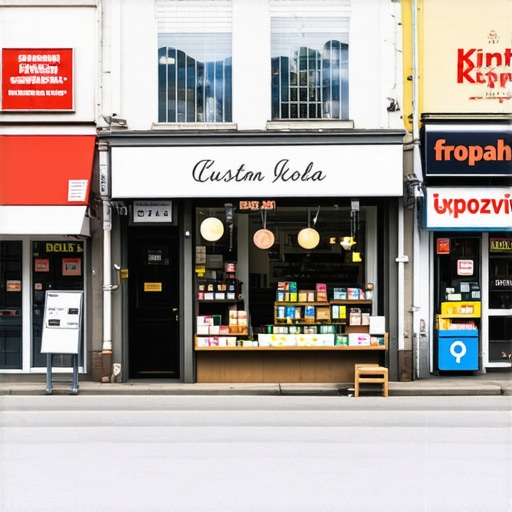
Walk down High Street in the Short North, and you’ll see it: the David vs. Goliath battle of the modern era. On one corner, you might have a massive national retailer with a marketing budget larger than the GDP of a small country. On the other, a local gem like Luminary Vintage, curated with care and deep roots in the Columbus community. In the world of traditional advertising, Goliath wins every time. But in the world of google business profile seo, the rules are different. Small businesses in Central Ohio are currently wielding a “slingshot” that big-box competitors simply cannot replicate: Hyperlocal Proximity Signals. I’m Dan Foland, and for years, our team at Columbus Local SEO has watched the “Proximity Paradox” play out. We’ve seen a local mom-and-pop plumber in Clintonville consistently outrank national franchises that have 10,000 more reviews. Why? Because Google’s algorithm is increasingly prioritizing the “Searcher-Business Distance” and neighborhood relevance over raw brand authority. If you are a small business owner in Columbus, you don’t need a million-dollar budget to dominate the map pack; you need to understand the technical signals that tell Google you are the most relevant answer for a searcher standing on Broad Street right now. According to every major industry survey, “Proximity of Address to the Point of Search” remains the #1 local ranking factor. However, there is a nuance most agencies miss. Proximity is a filter, not just a ranking boost. If you are 0.5 miles away from a searcher but your digital signals are weak, Google will bypass you for a business 1.2 miles away that proves its local authority. This is where local seo tools become essential for tracking how your visibility fluctuates as a searcher moves from the Ohio State campus toward Grandview Heights. The real shift occurred with the “Possum” update. Before Possum, Google often showed multiple listings from the same brand or filtered out businesses that were just outside the city limits. Post-Possum, Google began filtering out businesses that are physically close to each other but offer the same service. This was a gift for unique Columbus shops. If three big-box stores are clustered in a shopping center at Polaris, Google might only show one in the Map Pack, leaving room for a specialized local shop in Westerville to claim a spot. To capitalize on this, you must use a google maps ranking service that focuses on widening your “proximity radius” rather than just optimizing for your front door. To outrank a giant, you must win the “Relevance” and “Prominence” categories so convincingly that they outweigh the giant’s brand name. Proximity is the baseline. If a searcher is in German Village looking for “artisan coffee,” Google looks at the shops nearby. If Adelphi Bank or a local community-led success story is nearby and has optimized for google business profile seo, they win the relevance signal because their content is tied specifically to that neighborhood’s history and traffic patterns. Big-box retailers suffer from “Corporate Generic-ism.” Their website content is written by a team in a different state who has never stepped foot in the Arena District. This is your greatest advantage. To rank google business profile listings effectively, your website must breathe Columbus. Don’t just say you serve “Columbus, Ohio.” That is too broad. You need to create content that mentions specific landmarks, intersections, and neighborhood quirks. If you are a contractor, talk about the specific challenges of working on historic homes in Olde Towne East versus the new builds in New Albany. This level of detail creates a “Geo-Relevance” signal that Google uses to verify your proximity. When you write about the traffic patterns near the 315 and I-71 split, or how your service reach extends from the Scioto Mile to the Olentangy Trail, you are feeding the algorithm data points that a national competitor cannot fake. We often see businesses fail because Why Your Ohio city pages are boring customers and Google to death. Instead of a generic list of zip codes, create “City Landing Pages” that act as local guides. Mention local partners, community events like Red, White & BOOM!, or even the local high school football rivalries. This “Hyperlocal Gravity” pulls your Map Pack ranking higher because Google sees you as an integral part of the local ecosystem, not just a dot on a map. Many Columbus business owners think that simply having a map on their “Contact Us” page is enough. It isn’t. There is a technical nuance to how you “pin” your location in Google’s mind. We have found that The exact maps embed strategy that helps Columbus shops rank faster involves more than just a standard iFrame. It requires an optimized embed that links your Google Business Profile (GBP) CID number directly to your website’s Local Business Schema. Schema markup is a “behind-the-scenes” code that tells Google exactly what your business is, where it is, and what it does. For a small shop in Hilliard or Dublin to beat a national chain, your Schema must be flawless. It should include your exact latitude and longitude, your NAP (Name, Address, Phone) consistency, and even your “SameAs” links to your social profiles. When Google’s crawlers see this data mirrored on your site and your GBP, it reinforces the proximity signal. It’s about reducing friction for the algorithm. If you’re unsure if your technical signals are hitting the mark, utilizing a google maps ranking service can help automate the verification of these coordinates. This ensures that when someone searches for local seo services in Columbus, your business isn’t just a candidate – it’s the verified local authority. In the lead-up to the 2026 Google Business Profile algorithm shift, Google is placing more weight on how people interact with your listing. This is known as “Behavioral Signals.” If people in Columbus frequently search for your brand name or click “Directions” to your shop while they are already in the vicinity, Google takes notice. This is a massive proximity signal. Consider a local business like Certified (the dispensary). By offering a drive-thru experience or specific local “check-in” incentives, they drive a high volume of local mobile engagement. When a user opens Google Maps and interacts with your profile while standing in the Short North, it tells Google: “This business is highly relevant to this specific geographic coordinate.” Small shops can trigger these signals by using Google Business Profile posts effectively. Don’t just post national holidays; post about the construction on High Street and how customers can find a parking spot behind your shop. This type of content is incredibly useful for local searchers and increases your Click-Through Rate (CTR). High CTR from local IP addresses is a “secret sauce” for google business profile optimization. If you are struggling to see these interactions, you might find that Why Your Columbus Store Is Invisible on Maps [3 Quick 2026 Fixes] provides the immediate remedy needed to jumpstart your engagement. Furthermore, don’t ignore the “Open Now” filter. As we move toward 2026, mobility-tested strategies are becoming the norm. If your shop is the only one in Clintonville marked as “Open” at 7:00 PM on a Tuesday, you will dominate the proximity search regardless of how many backlinks your competitor has. For more advanced tactics, check out 7 Hidden Columbus GMB Features to Steal Map Traffic in 2026. We often hear clients say, “But the big-box store has 2,000 reviews and I only have 150.” Here is the secret: 100 local reviews often beat 1,000 national reviews. Google’s AI is now sophisticated enough to parse the sentiment and the “geo-keywords” within your reviews. When a customer leaves a review saying, “Best plumber in Upper Arlington, they arrived at my home near Reed Road in 20 minutes,” that review is a goldmine. It contains: A national chain might have thousands of reviews that just say “Good service” or “Clean store.” Those lack the “Hyperlocal Gravity” needed to improve google maps ranking in a specific Columbus suburb. This is why Why 5-Star Reviews Alone Won’t Save Your Columbus Map Rank – you need reviews that act as geo-signals. Encourage your customers to be specific. Ask them to mention the neighborhood or the specific Columbus landmark they are near. This builds a “Sentiment Gap” between you and the big-box competitors. You aren’t just a store; you are a local landmark. To track how these reviews impact your standing, using a google maps rank tracker is the best way to see the direct correlation between review velocity and map position. As we look toward the 2026 Google Business Profile algorithm shift, the emphasis is moving toward “Trust” and “Validity.” Google is becoming more aggressive in verifying that a business actually exists where it says it does. This is a major hurdle for “ghost kitchens” or service area businesses that try to game the system by using residential addresses. For legitimate Columbus shops, this is an opportunity. By doubling down on 4 Proximity Fixes to Win Columbus Map Pack Ranks in 2026, you can insulate your business against future updates. This includes maintaining a consistent presence on local directories, participating in Columbus-based digital forums, and ensuring your GBP is updated with real-time photos of your local team and storefront. The “David” shops of Columbus are winning because they are agile. They can update their google business profile seo strategy in an afternoon, while a big-box retailer takes six months to get a header change approved by legal. Use that speed to your advantage. Service Area Businesses (SABs) often struggle with proximity because they don’t have a physical storefront for customers to visit. However, the same proximity signals apply. If you are an exterminator in Columbus, your “proximity” is defined by where you are physically located when you complete jobs. Google tracks the location data of mobile devices. If your technicians are frequently opening their business apps in Dublin, Google begins to associate your business with Dublin. This is how How Columbus Exterminators Steal the Local Map Pack from Big Franchises. They don’t just set a 20-mile radius in their GBP settings; they prove they are active in those areas through localized project posts and neighborhood-specific testimonials. They use Google My Business Columbus: Secret Hacks to Increase Visibility like uploading photos that are geotagged to the specific neighborhood where the work was performed. By focusing on these micro-signals, a local contractor can effectively “shrink” the map for their competitors. You don’t need to be everywhere; you just need to be the most relevant choice in the three or four neighborhoods that drive your highest-margin jobs. The battle for the Columbus Map Pack isn’t won by the business with the most money; it’s won by the business that proves it is the “heart” of the neighborhood. Proximity gives small shops a seat at the table, but your relevance and prominence signals are what allow you to take the head of that table. From the Short North to Westerville, the opportunities for google business profile seo dominance have never been higher. By mastering hyperlocal content, technical map embeds, behavioral engagement, and review sentiment, you can outrank any big-box competitor that dares to enter your territory. If you’re ready to see how your business stacks up against the giants, I recommend performing a deep dive into your current standing. Use a rank google business profile tool to identify exactly where your “proximity wall” is, and then use the strategies we’ve discussed to break through it. If you need a custom roadmap for the 2026 shift, don’t hesitate to reach out to us at Columbus Local SEO. Let’s put your business on the map – and keep it there. For more insights on staying ahead of the curve, make sure to read our latest guide on Survival steps for the 2026 Google Business Profile algorithm shift. The future of local search is hyperlocal, and Columbus is leading the way.The specific proximity signals that let small Columbus shops outrank big-box competitors
The Proximity Paradox: Why “Close” Isn’t Always Enough
Understanding the Three Pillars: Proximity, Relevance, and Prominence
Signal #1: Hyperlocal Content & Geo-Relevance
Signal #2: The Map Embed & Schema Secret
Signal #3: Behavioral Signals & Local Engagement
Signal #4: Review Velocity & Sentiment Gap
The 2026 Outlook: Future-Proofing Your Proximity
How Columbus Exterminators and Contractors Can Win
Conclusion: Proximity is Your Gift, Relevance is Your Tool