
 Kev Caballero
 Stop your Ohio business from losing calls due to bad maps data
Stop Your Ohio Business From Losing Calls Due to Bad Maps Data
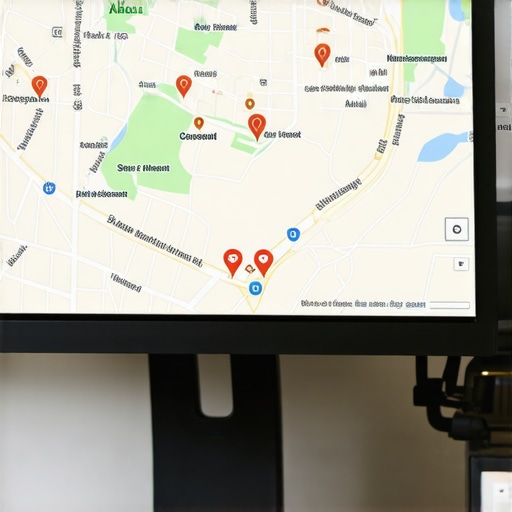
Imagine a potential customer driving down High Street in the Short North, looking for your boutique. Or perhaps it’s a homeowner in Dublin, frantically searching for an emergency plumber while their basement floods. They pull up Google Maps, find your listing, and hit “Directions” or “Call.” But the pin leads them to an empty lot, or the phone number rings a disconnected line. In my experience consulting for Columbus businesses, this isn’t just a minor inconvenience – it’s a revenue killer. This is the “Ghost Pin” epidemic, and it is silently draining the bank accounts of Ohio business owners every single day.
As an expert in google business profile seo, I have seen firsthand how bad data can derail even the most sophisticated marketing campaigns. When I audit Ohio GBP profiles, the first thing I look for isn’t just keywords; it’s the integrity of the data. If Google doesn’t trust your location or contact information, it won’t show you to customers. Period. With google business profile seo becoming increasingly competitive, you cannot afford to have “ghost pins” or outdated information floating around the web. You might be surprised to learn that Why Your Columbus Store Is Still Losing Map Leads to These 3 Common Errors often boils down to these fundamental data mismatches.
Section 1: The “Ghost Pin” Epidemic in Ohio
The reality of local search in 2026 is harsher than ever. Recent research indicates that roughly 82% of Google Maps revenue is now driven by ads. This means that organic visibility – the “free” spots in the local map pack – is more valuable and harder to obtain than it has ever been. When a business has a “ghost pin” (a listing that exists but points to incorrect location data), it doesn’t just lose that one customer; it loses its standing in the algorithm.
In Columbus, we see this frequently with businesses that have moved from the suburbs into the city center or vice versa. If your old address in Westerville is still floating around while you’re trying to rank for searches in the Brewery District, Google gets confused. When Google gets confused, it defaults to the competitor who has cleaner data. This is why Google Maps Ohio: How to Dominate Local Search Rankings is a goal that requires precision, not just effort.
The “Ghost Pin” isn’t just about the map; it’s about the entire ecosystem of local search. If a user clicks your listing and finds a “permanently closed” label because you didn’t manage your data transition correctly, that’s a lead gone to a competitor. Worse, Google’s AI-driven local search bots will flag your profile as unreliable, making it nearly impossible to rank higher on google maps without a massive cleanup effort.
Section 2: Why Google Maps Data Fails (The Science of Inaccuracy)
Why does Google get it wrong? To understand this, we have to look at how the algorithm aggregates data. Google doesn’t just rely on what you type into your dashboard; it cross-references thousands of sources across the web. Mike Blumenthal, a titan in the local SEO space, has published research showing that data accuracy problems often skyrocket once you look below the top 10 listings. This suggests that high-ranking businesses aren’t just “lucky” – they are the ones with the most consistent data fingerprints.
In the world of local search optimization, we call this the “Data Ecosystem.” Google pulls from yellow pages, local directories, state licensing boards, and even user-submitted “suggested edits.” If a disgruntled former employee or an aggressive competitor suggests an edit that your phone number has changed, and you don’t catch it, Google might update your listing automatically. This is where a professional google maps optimization service becomes essential.
According to Mappedin research, the errors we see range from “mildly annoying” duplicates to “catastrophic” hijacked calls. In some extreme cases, bad actors create fake listings in Columbus, using the names of legitimate businesses but routing the phone calls to a lead-generation farm or a direct competitor. If your data isn’t locked down and verified, your business is a target. This is why maintaining a clean google business profile seo strategy is your first line of defense against local search fraud.
Section 3: The 2026 Core Update & AI Spam
As we navigate the fallout of the “May 2026 Core Update,” the landscape has shifted again. This update was specifically designed to “smoke out” AI-generated spam and low-quality local listings. While this is good news for legitimate Ohio businesses, it has created a significant amount of “noise.” The update intensified the way Google evaluates “Trust Signals.”
When I consult for local firms, I explain that while proximity, relevance, and prominence remain the pillars of local search, “Trust” is the 2026 tie-breaker. Google’s AI now looks for real-world signals that your business exists. Are people checking in on social media? Are there mentions of your business in local Columbus news outlets? Is your business license verified through the Ohio Secretary of State? Using advanced GBP ranking tools can help you identify where these trust gaps exist.
AI spam has made Google’s filters more aggressive. If your business information looks even slightly “templated” or inconsistent, you might find yourself filtered out of the map pack entirely. This is a common hurdle I discuss in Survival steps for the 2026 Google Business Profile algorithm shift. To survive this shift, you need to prove you are a local authority, not just another digital entry.
Section 4: 5 Critical Maps Errors Killing Your Ohio Lead Gen
Through hundreds of audits, I’ve identified five recurring errors that prevent Ohio businesses from reaching their full potential. If you want to rank google business profile listings effectively, you must address these:
1. NAP Inconsistency
NAP stands for Name, Address, and Phone number. It sounds simple, but a mismatch between “123 Main Street” on your website and “123 Main St.” on a Columbus directory can stall your rankings. Google’s algorithm is a machine; it wants exact matches. When there is a discrepancy, the algorithm’s confidence score in your business location drops. This is a fixable but tedious part of local seo services.
2. The Wrong Service Area (The SAB Trap)
Many Ohio businesses, like HVAC contractors or mobile dog groomers, are Service Area Businesses (SABs). Often, these businesses accidentally hide themselves by not setting their service areas correctly or, conversely, by trying to claim a service area that is too large (like the entire state of Ohio). If you are based in Hilliard, don’t tell Google you serve Cleveland unless you have the data to back it up. Overreaching leads to a “relevance” penalty. Check out Fix Your Columbus Google Maps Pin to Increase Store Calls in 2026 for more on this.
3. Ghost Reviews & The “2026 Trust Test”
Are your reviews disappearing? In 2026, Google implemented the “Trust Test,” an AI filter that removes reviews it deems suspicious. This includes reviews from accounts that have never been to Ohio or reviews that use generic “great service” language. For Columbus businesses, this means you need authentic, location-specific reviews. A review that mentions “The best pizza in Grandview” is worth ten times more than a generic “Five stars” review.
4. Category Confusion
Your primary category is the most important piece of metadata on your profile. I often see Columbus med spas struggling because they’ve chosen a generic “Health Club” category instead of “Medical Spa.” This subtle mistake can prevent you from appearing in the very searches your customers are performing. This is a topic I cover extensively in How Columbus med spas finally win the local map pack battle.
5. Unoptimized Attributes
Google has added dozens of attributes like “Online Estimates,” “Identifies as Veteran-led,” and “Wheelchair accessible.” Many Ohio businesses leave these blank. In 2026, these attributes are used as filters in the mobile Maps app. If a customer filters for “Open Now” or “Online Appointments” and you haven’t checked those boxes, you are invisible to them, regardless of your local map pack seo efforts.
Section 5: The 2026 Playbook for Ranking in the Top 3
To dominate the local map pack in 2026, you need a proactive strategy. You cannot simply “set it and forget it.” Here is the playbook I use for my clients to ensure they rank higher on google maps.
- Perform a Comprehensive Google Business Profile Audit: Use professional local seo tools to scan for duplicate listings and inconsistent NAP data across the web. You need to see what Google sees.
- Implement Local Business Schema Markup: Your website needs to talk to Google in its own language. By adding JSON-LD schema markup to your site, you provide a clear, structured roadmap that confirms your business name, address, phone number, and hours.
- Hyperlocal Content Strategy: A Reddit finding recently highlighted that cities which look identical on a map (like various suburbs of Columbus) behave differently in search. To rank in New Albany vs. ranking in Grove City, your website needs hyperlocal content. Mention local landmarks, community events, and specific neighborhood names. Generic templates are being deprioritized by the 2026 algorithm.
- Utilize Local SEO Software: To stay ahead, you need to track your “grid rankings.” This shows you how you rank at specific points on a map. You might be #1 when someone is standing in your lobby, but #10 when they are two miles away. Local seo software helps you identify these “weak zones” so you can adjust your strategy.
When you optimize your google business profile optimization efforts, you aren’t just checking boxes; you are building a digital asset. The businesses that win in 2026 are those that treat their Google Maps presence as their primary storefront.
Section 6: Conclusion & The Path to Map Pack Dominance
The digital landscape of Ohio is shifting. Every day, national chains with massive budgets are trying to move into the Columbus market and push local businesses out of the map pack. They have teams of people dedicated to google business profile seo. Don’t let a national chain steal your hard-earned traffic simply because your pin is 100 feet off or your phone number is unverified on a secondary directory.
Inaccurate data is the “silent killer” of local business. It erodes trust with both your customers and Google’s algorithm. By taking the time to audit your profile, fix your NAP data, and embrace the 2026 trust signals, you can reclaim your spot at the top of the search results. Your customers are out there, searching for you right now on their phones. Make sure they can find you.
Don’t wait for your call volume to drop further. Audit your profile today and start your journey to rank higher on google maps. If you need a partner who understands the unique challenges of the Ohio market, I am here to help you navigate the complexities of modern local search.