
 Kev Caballero
 Why tracking local keywords is the only way to see your real Ohio reach
Why Tracking Local Keywords is the Only Way to See Your Real Ohio Reach
You’ve spent months investing in your google business profile seo, yet the phone isn’t ringing as often as your reports suggest it should. You check your rankings from your office in Downtown Columbus and see your business at the #1 spot. You’re thrilled – until you realize that a potential customer searching from a coffee shop in the Short North or a living room in German Village doesn’t see you at all. This is the “Invisible Business” problem, a phenomenon where “Vanity Rankings” mask a lack of “Real Reach.” In the competitive Ohio landscape, from the bustling streets of the Arch City to the suburbs of Dublin and Westerville, appearing number one at your own desk means nothing if you are invisible two miles away. To truly dominate, you must move beyond broad metrics and embrace hyperlocal tracking.
The Proximity Trap: Why Your Ohio Rankings Change Every Mile
The biggest misconception among Ohio small business owners is that search results are static across a city. In reality, Google’s local algorithm is hyper-sensitive to the user’s physical location. According to Google Business Help, the three main local seo ranking factors are Relevance, Distance, and Popularity. While relevance and popularity (prominence) are often the focus of standard SEO, “Distance” is the silent killer of many marketing campaigns.
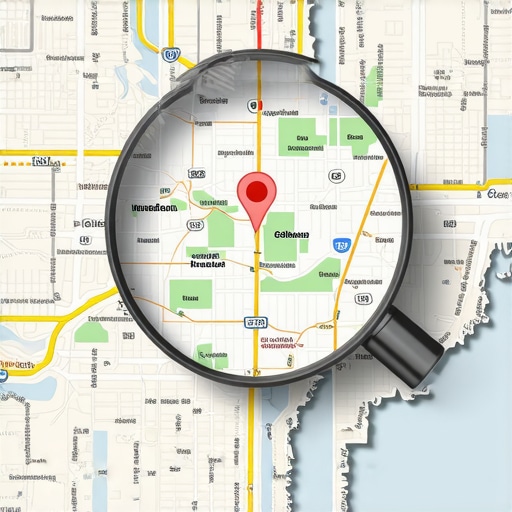
We call this the “Proximity Trap.” Google Maps results are geographically restricted, often shifting within just a few blocks. This is the essence of hyperlocal seo. If you are a plumber based in Hilliard, Google assumes you are most relevant to people in Hilliard. As the searcher moves toward Upper Arlington, your visibility drops precipitously, even if your google business profile optimization is technically perfect. This happens because Google aims to provide the most convenient solution to the user. Without granular tracking, you might think you “rank for Columbus,” but you are actually only ranking for a 1-mile radius around your physical address. Understanding this spatial volatility is the first step toward expanding your “Real Reach” across the 614.
Why National SEO Tools Fail Local Ohio Businesses
Standard, national-level SEO tools are designed for broad visibility. They tell you where you rank on a “city-wide” average. For a local business, an “average” ranking is a lie. If you rank #1 in one neighborhood and #20 in five others, your average is #16. That doesn’t tell you where you need to improve; it only tells you that you’re losing. These tools fail because they don’t account for the “grid” of local search.
Contrast this with a specialized google maps rank tracker. Instead of a single number, a hyperlocal tool provides a visual heat map of your performance. You need to know how you rank in the Short North versus German Village versus Dublin. If you see a sea of green (rank 1-3) around your office but a wall of red (rank 10+) as soon as you cross I-71, you have a proximity issue that national tools simply cannot diagnose. By using dedicated local seo tools, you can identify exactly where your “visibility border” is and take strategic steps to push that border further into high-value neighborhoods.
The 2026 AI Shift: Generative Engine Optimization (GEO) for Local Search
As we look toward the future, the landscape of search is shifting from traditional lists to AI-driven answers. By 2026, “Generative Engine Optimization” (GEO) will be the standard. AI search engines don’t just look for keywords; they synthesize data from your profile, your website, and your customer reviews to provide a definitive recommendation. This makes Survival steps for the 2026 Google Business Profile algorithm shift essential reading for any Ohio business owner.
AI drafts now prioritize hyperlocal keywords and specific unique selling points (USPs) found in user-generated content. If a customer in New Albany searches for “best emergency roofer,” the AI won’t just look at who has the most reviews; it will look for reviews that specifically mention “emergency” and “New Albany.” Tracking these hyperlocal nuances allows you to feed the AI the facts it needs to recommend you. In the GEO era, being a generalist is a death sentence. You must be the hyper-local authority that the AI trusts to solve a specific problem in a specific location.
Industry Deep Dive: How Real Reach Varies for Ohio Contractors and Med Spas
The strategy for “Real Reach” isn’t one-size-fits-all. A roofer in Westerville faces a completely different challenge than a med spa in Upper Arlington. For service-area businesses (SABs) like contractors, proximity is often more fluid, but the competition is fiercer. A roofer needs to show up across the entire metro area, which requires a robust strategy of localized landing pages and geographically-tagged project galleries to rank higher on google maps.
On the other hand, med spas are often destination-bound. A med spa in Upper Arlington might have a 5-mile “gold zone” where most of their clients live. For these businesses, 5-star reviews alone won’t save a rank if proximity signals are weak. If a competitor opens up two blocks closer to a high-density residential area, your ranking can tank overnight. This is why it’s vital to understand how Columbus med spas finally win the local map pack battle: they don’t just wait for customers; they use hyperlocal tracking to identify neighborhoods where they are losing ground and then run targeted local campaigns to reclaim that territory. Whether you are selling Botox or basement waterproofing, your local map pack seo strategy must be informed by where you are currently invisible.
How to Implement a Hyperlocal Tracking Strategy
Ready to see your real Ohio reach? Follow this step-by-step guide to move from vanity metrics to actionable data:
- Audit Your Current Profile: Start with a thorough google business profile optimization. Ensure your categories, service areas, and business hours are 100% accurate.
- Identify “Money Keywords” + Geo-modifiers: Don’t just track “Botox.” Track “Botox near High St” or “Botox in 43215.” These are the terms your actual customers are using.
- Visualize the Grid: Use professional local seo tools to run a ranking grid. This will show you exactly where your pin drops off the map.
- Analyze Competitor Proximity: Look at who is outranking you in the “red zones.” Are they closer to the searcher, or do they have more localized content?
- Generate Hyperlocal Content: Create blog posts or case studies specifically about the neighborhoods where you want to grow.
2026 Local SEO Checklist:
- Verified GBP with 100% completion.
- Minimum of 2 new localized reviews per week.
- Hyperlocal grid tracking performed monthly.
- GEO-optimized website content focusing on neighborhood USPs.
- Active “Google Updates” (formerly Posts) featuring local landmarks.
Conclusion: Turning Data into Phone Calls
In the world of google business profile seo, what you don’t know will hurt you. Tracking local keywords isn’t just about pride; it’s the only way to prove ROI and ensure your marketing budget isn’t being set on fire. If you don’t know where you are invisible, you can’t fix the gaps in your coverage. By moving away from city-wide averages and toward hyperlocal grid tracking, you can finally see the “Real Reach” of your Ohio business.
Don’t let your competitors own the neighborhoods that should be yours. Audit your profile today and utilize professional google business profile seo services to reclaim your local market and turn those map pins into phone calls. Your real Ohio reach is waiting to be discovered.