

 Kev Caballero
 The One Address Error Sabotaging Your Columbus Business Listings
The One Address Error Sabotaging Your Columbus Business Listings
Imagine you own a high-end med spa in Easton Town Center or a bustling plumbing business serving the Short North. You’ve invested in professional photography, your service is impeccable, and your customers rave about you in five-star reviews. Yet, when you search for your services on your phone, you are nowhere to be found in the Google Map Pack. Instead, a competitor three blocks away with half your reviews is sitting comfortably at the top.
You’ve checked your keywords, you’ve posted updates, and you’ve optimized your description. So, what is the silent killer holding you back? In my years of providing local seo services here in Columbus, I’ve found that the culprit is often a single, seemingly minor address error. This is the “Ghost Pin” phenomenon caused by NAP (Name, Address, Phone) inconsistency.
In this guide, we are going to break down why your address formatting is the foundation of your google business profile seo and how a single “St.” versus “Street” discrepancy could be costing you thousands of dollars in lost Columbus leads. By the time you finish reading, you’ll know exactly how to audit your presence and reclaim your spot on the map.
What is NAP Consistency and Why Does Google Care?
In the world of local search optimization, NAP stands for Name, Address, and Phone number. It sounds simple, but for Google’s algorithm, NAP is the digital DNA of your business. Google’s primary goal is to provide users with accurate, trustworthy information. If Google finds three different versions of your address across the web, it begins to doubt the legitimacy of your business.
Research from Bird Marketing indicates that NAP uniformity is a “critical factor in local SEO success.” When your data is identical across your website, your Google Business Profile (GBP), and third-party directories like Yelp or the Yellow Pages, it sends a signal of authority. Conversely, inconsistent data “erodes trust and rankings,” according to Prose Media. In the eyes of an algorithm, if you can’t get your own address right, why should Google trust you enough to recommend you to a searcher?
As we move into 2026, the weight of these trust signals has only increased. For a successful google business profile optimization strategy, you must understand that “NAP = Legitimacy,” a concept pioneered by Third Marble Marketing. Google isn’t just looking at your profile; it’s looking at the entire ecosystem of the web to see if the “entity” of your business is stable. If your address is a moving target, your rankings will be, too.
The “One Error”: Formatting Inconsistency in Columbus
The “One Error” isn’t usually a completely wrong address – it’s a formatting variation. This is where most Columbus business owners trip up. We live in a city with complex street naming conventions. Think about High Street. Is it “N. High St,” “North High St,” or “North High Street”? To a human, these are the same. To a google maps ranking service or an automated algorithm, these can appear as three distinct locations.
Common formatting errors include:
- Abbreviation vs. Full Word: “St.” vs. “Street,” “Rd.” vs. “Road,” or “Blvd.” vs. “Boulevard.”
- Suite and Unit Numbers: Writing “Suite 200” on your website but “#200” on Yelp, or leaving it off entirely on your Facebook page.
- Directionals: “W. Broad St” vs. “West Broad Street.” In Columbus, missing a directional can put you on the entirely wrong side of town.
- The “Arena District” Problem: Using a neighborhood name as part of the address line instead of the actual street address.
These variations create what we call “duplicate citations” or “messy structured citations.” When Google’s crawlers find these discrepancies, they don’t know which one is the “truth.” Instead of ranking the most relevant business, Google often defaults to the one with the most consistent data. This is why messy structured citations are stalling your Ohio map ranking and keeping you out of the top three spots.
In 2026, the google maps seo landscape is less about keyword stuffing and more about entity validation. If your address formatting is fragmented, your business entity is fractured. You are essentially competing against yourself for a spot in the local pack.
How to Audit Your Columbus Business Address
Before you can fix the problem, you have to find it. Auditing your address isn’t just about looking at your front door; it’s about looking at how the digital world perceives that door. Here is a step-by-step guide to performing a comprehensive audit.
Step 1: Determine Your USPS Official Format
The gold standard for address formatting is the United States Postal Service (USPS). Go to the USPS website and use their ZIP Code lookup tool. Enter your address exactly as you think it is. The result they give you – including the specific way they abbreviate “Suite” or “Street” – is the format you should adopt across the entire internet. This is the “source of truth” that helps rank google business profile listings effectively.
Step 2: Use a Professional Audit Tool
Manually searching for every mention of your business is impossible. I recommend using a google business profile audit tool to scan the major directories. You can find excellent local seo tools that will crawl the web and highlight every instance where your NAP is inconsistent. These tools will show you exactly where “St.” is used instead of “Street” and where your suite number is missing.
Step 3: The Phone Number Search
A “hidden” way to find old, incorrect addresses is to search for your primary business phone number in quotes on Google. This often unearths old listings from previous locations or outdated directories that you forgot existed. These “ghost listings” are often the primary reason for a dip in rankings. If you find an old address, you must claim that listing and update it or request its removal.
If you find that your data is a mess across dozens of sites, you might need to look into citation building services to clean up the wreckage. Using specialized local seo software can automate much of this cleanup, ensuring that your Columbus business presents a united front to Google’s bots.
Fixing the “Ghost Pin” and Map Placement
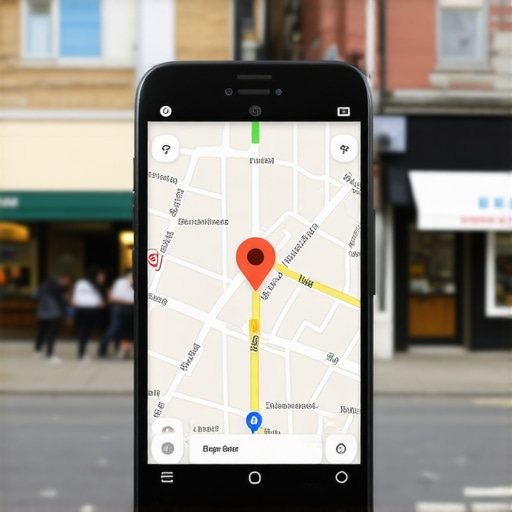
Sometimes, your address text is 100% consistent, but your “Ghost Pin” is the problem. A Ghost Pin occurs when the red marker on Google Maps isn’t actually on your front door. It might be in the middle of the street, in the back alley, or even on a different building in the same complex. This is a common issue for businesses in the Arena District or German Village, where buildings are packed tightly together.
If your pin is in the wrong place, Google’s directions will lead customers to the wrong spot. More importantly, Google’s proximity algorithm might think you are located somewhere you aren’t, affecting your local map pack seo. You need to fix the Ghost Pins hiding your local business Columbus in 2026 by manually adjusting your marker.
To fix this:
- Log into your Google Business Profile.
- Go to “Edit Profile” and then “Business Information.”
- Click on “Location.”
- Click the “Adjust” button on the map.
- Drag the pin to your exact entrance. Don’t just put it on the building; put it where people walk in.
It sounds minor, but I’ve seen cases where how a single address fix brought this Ohio local business back to the map pack within 48 hours. When Google knows exactly where you are, it has the confidence to show you to nearby searchers.
Advanced 2026 Tactics: Beyond the Address
While fixing your address is the most critical step, dominating the Columbus market in 2026 requires a multi-layered approach. Once your NAP is consistent, you need to reinforce that data with hyperlocal signals.
Hyperlocal Content Integration
Your website shouldn’t just say you serve “Columbus.” It should mention the Short North, Victorian Village, Upper Arlington, and Bexley. By creating location-specific pages that reference your consistent address, you are building a “geo-fence” of relevance around your business. This is a core component of high-level local seo services.
The Power of Schema Markup
Schema markup is a snippet of code you add to your website that tells search engines exactly what your data means. Instead of hoping Google “reads” your address correctly, Local Business Schema “tells” Google: “This is my Name, this is my Address, and this is my Phone Number.” This eliminates any ambiguity. If you aren’t sure how to implement this, checking a google maps rank tracker can help you see if your current efforts are moving the needle or if you need more technical help.
The Maps Embed Strategy
Don’t just list your address on your contact page; embed a Google Map. But there is a trick to it. You shouldn’t just embed a map of your city; you should embed the specific map from your Google Business Profile. This creates a direct link between your website and your GBP. To see the technical details, read about the exact maps embed strategy that helps Columbus shops rank faster.
Finally, if you are struggling to break into the top three, consider a professional google maps ranking service. Sometimes, the competition in Columbus is so fierce that you need an expert to navigate the nuances of the 2026 algorithm shifts.
Conclusion: Reclaim Your Columbus Rankings
The “One Address Error” is the most common – and most fixable – problem in google business profile seo. In a city as competitive as Columbus, you cannot afford to let a “St.” versus “Street” discrepancy or a misplaced map pin sabotage your growth. Consistency is the foundation of trust, and trust is the foundation of rankings.
By auditing your NAP, fixing your Ghost Pins, and reinforcing your location with hyperlocal content and schema, you can transform your online presence. Don’t let your business remain invisible. For more comprehensive help, explore our Columbus SEO Strategies: Unlock Local Business Success in Ohio or check out Google Maps Ohio: How to Dominate Local Search Rankings.
If you want to stop guessing and start ranking, use a google maps rank tracker to see where you stand today. If you aren’t in the top three, it’s time to clean up your citations and fix that address error once and for all.
Caitlin Figaro
ROI-Focused SEO Professional, Columbus, Ohio